
My Take on AI in Cybersecurity: Why We Cannot Turn Our Backs on Evolution
By 0x6a03448f4d
Published on May 29th, 2026
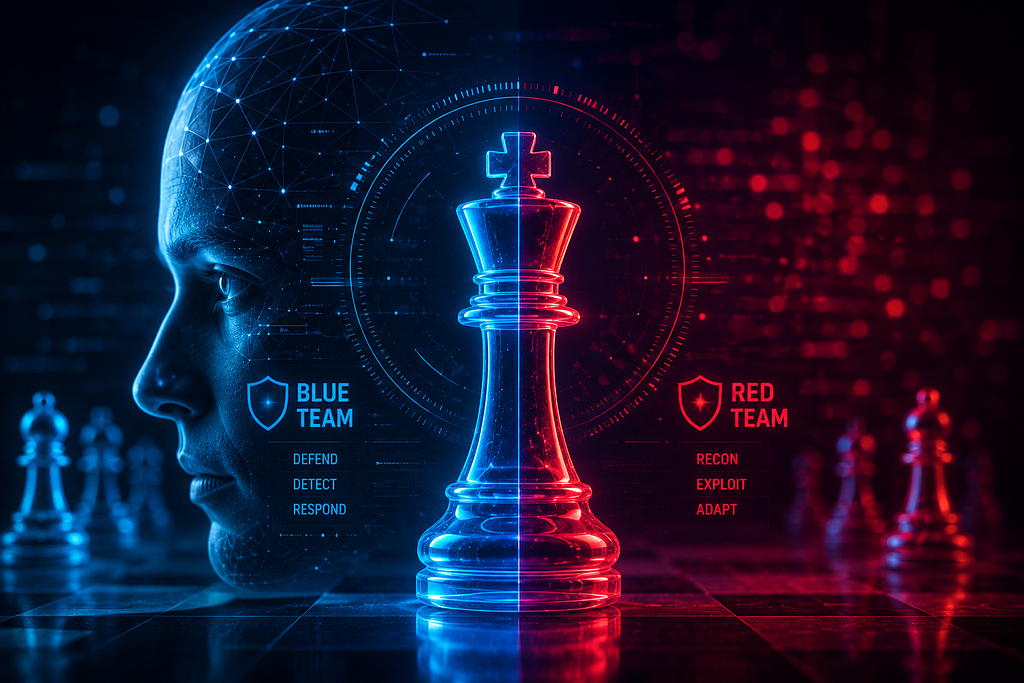
There is a constant debate about the role of Artificial Intelligence in our daily lives. But when I look at the current state of cybersecurity, my view is crystal clear: denying AI in this sector is denying evolution itself. It means decelerating a growth that must be rapid and complex to keep pace with the reality of the digital world.
I see this firsthand. As someone currently developing AI pentesting agents, I know the reality on the ground. AI is no longer a technological luxury — it is an absolute necessity. However, to understand the true scope of this shift, we cannot view cybersecurity as a monolith. We must dissect AI’s impact across its different battlefronts and, above all, on the future of the professionals who operate them.
Red Team and Pentesting: The Illusion of Total Autonomy
In the practical development of AI agents for pentesting, reality reveals its nuances. On the ethical offensive side, AI is extraordinary. It allows us to handle an enormous complexity of attacks and devise tactics at breakneck speed. It is a premier tool for writing scripts, automating vulnerability exploitation, and crafting payloads in record time.
Yet, we still stumble upon a barrier: a lack of maturity. The machine lacks the prior knowledge, intuition, and “scent” that a trained human possesses to know what to do when the obvious path fails or when the target’s context demands creativity.
The machine executes, but the instinct to breach remains profoundly human.
Blue Team: The Ultimate Building Tool and the Risk of Noise
On the defensive side, the scenario mirrors the same paradigm. AI is incredibly competent at analysing mountains of data and spotting attack patterns invisible to the naked eye. Furthermore, it has revolutionised daily operations: it has become our greatest ally in rapidly generating complex rules for the SOC, crafting advanced search queries, or fine-tuning firewall configurations.
The flip side? A propensity for generating false positives. If the Blue Team trusts AI blindly, operational noise can paralyse the business. This is why, once again, the technology finds the threats, but the analyst validates the reality.
Governance, Risk & Compliance (GRC): The Analytical Brain
Even in risk management and compliance, the impact is seismic. Mapping vulnerabilities against dozens of international standards, analysing internal policies, and predicting the business impact of an incident are massive undertakings. AI cross-references this data and generates risk reports in a fraction of the time, allowing leadership to make decisions based on dynamic, real-time dashboards rather than static spreadsheets.
The Future of Work: Replacement or Superpower?
With all this on the table, the inevitable question arises: will jobs disappear?
The answer isn’t binary; it depends on the specific field and the professional’s adaptability. Many operational and repetitive tasks will be partially or fully automated. Humans will definitively transition into a supervisory role.
But there is a critical warning here: if this human gets carried away by everything the AI says, they will merely be someone sitting in a chair doing nothing useful. A lack of critical thinking will be fatal.
On the other hand, the professional who knows how to leverage AI to their advantage will become an unstoppable workforce. This “augmented human” will execute far more complex and rapid tasks, delivering single-handedly the results that today require an entire team. The hours of heavy, repetitive labour will decrease, but the intellectual demand will skyrocket.
Unfortunately for the sceptics, the raw truth is this: people will not be replaced by Artificial Intelligence, but by other professionals who use AI to their advantage.

Evolving with Awareness
Believing in AI doesn’t mean handing over the system keys with our eyes closed. Humans must remain critical and understand the mechanics behind the algorithm’s decisions. For this evolution to be secure, there must be strict constraints on how AI is used, setting clear operational boundaries. Embracing AI is the only way forward, but always with a firm hand on the steering wheel.
Transparency Note: This article was drafted with the assistance of AI. The goal? To save time, communicate directly, and present the structural facts as they are, with absolute confidence. However, the critical thinking, the experiences detailed here (from developing pentesting agents to market vision), and the opinions defended are genuinely my own and reflect my reading of the reality of cybersecurity.
What is your take on this? Are you already integrating AI into your daily cybersecurity operations, or do you still see it as a liability rather than an asset? Let’s keep the conversation going — drop your thoughts in the comments below or connect with me to share your experience!